
Treating older men with early-stage prostate cancer who also have other serious underlying health problems with aggressive therapies such as surgery or radiation therapy does not help them live longer and, in fact, can be detrimental, according to a study done by researchers at the University of California, Los Angeles. The study was published in the May 13th 2014 early online edition of the peer-reviewed journal Cancer.
Tag: depressive symptoms
New Molecule to Treat Asthma

A new, potent therapeutic agent to treat asthma is on the horizon, according to findings published on May 12th 2014 in Proceedings of the National Academy of Sciences show promise for, a chronic disease affecting more than 25 million Americans. The research study was done at Sanford-Burnham Medical Research Institute in Orlando, the Max Planck Institute for Colloids and Interfaces in Germany, the Free University of Berlin in Germany, Shinshu University in Japan, and the University of California, San Diego.
“Pre-crastination” Appears to Be Common

Putting off tasks until later, or procrastination, is a common phenomenon — but new research suggests that “pre-crastination,” hurrying to complete a task as soon as possible, may also be common.
Thestudy, published in May 2014 in Psychological Science, a journal of the Association for Psychological Science, suggests that people often opt to begin a task as soon as possible just to get it off their plate, even if they have to expend more physical effort to do so.
Stem Cells Make “Heart Disease-on-a-Chip”

Harvard scientists have merged stem cell and “organ-on-a-chip” technologies to grow, for the first time, functioning human heart tissue carrying an inherited cardiovascular disease. The research appears to be a big step forward for personalized medicine because it is working proof that a chunk of tissue containing a patient's specific genetic disorder can be replicated in the laboratory.
Is It Shingles?

Shingles is one of the most common conditions for American adults: more than 50 percent have had it by the time they reach 80. However, it’s most frequent in the years between 60 and 80. How can you tell if you have this bothersome, painful problem, and what should you do about it? The experts at the SeniorHealth division of the National Institutes of Health have some answers:
The Life-or-Death Molecule

Researchers have zeroed in on a molecule that’s involved in cell death, a discovery that could lead to better treatment for inflammatory illnesses such as psoriasis, rheumatoid arthritis and Crohn’s disease.
The investigators found that a previously identified molecule, RIPK1, inhibits necroptosis (cell death), which is implicated in inflammatory conditions. Paradoxically, RIPK1 is also responsible for initiating cell death.
Cervical Cancer Screening Guidelines May Be Wrong

A study has found that cervical cancer rates are higher than previously believed, especially among women 65 and older as well as African-American women in all age groups. The finding brings into question current screening guidelines that don’t recommend Pap smear screenings for women 65 and older.
The study, led by researchers from the University of Maryland School of medicine, was published in the journal Cancer.
Do You Really Need Vitamin D Supplements?

You may have heard that researchers who analyzed hundreds of studies have concluded that vitamin D supplements won’t protect healthy, middle-aged adults from osteoporosis. And even worse, the scientists say the supplements may increase the risk of death from other diseases.
However, none health experts at the Cleveland Clinic warn that you need to make sure you aren’t deficient in vitamin D before you stop taking the supplement, especially if you are past menopause.
Promise of New Meds for Allergies

Help for sneezy, wheezy, itchy seasonal allergies may be at hand. Researchers at the University of Eastern Finland and Kuopio University Hospital, also in Finland, have identified several target molecules that are suitable for the development of new allergy drugs. The work, completed in a large-scale European Union project, was published in May 2014 in Journal of Allergy and Clinical Immunology.
Plugging Blood Vessels to Save Vision

The growth of malformed blood vessels that can burst is a leading cause of vision loss in North America. Retinopathy and retina degeneration are associated with premature birth, with diabetes, and with increasing age. Now a new drug approach has been developed by a research team led by Dr. Andras Nagy at the Lunenfeld-Tanenbaum Research Institute, Mount Sinai Hospital in Toronto for safer clean-up of deformed blood vessels in the eye. The study was published in May 2014 in EMBO Molecular Medicine.
Calcium Supplements Don’t Up Heart Risk for Women

Previous studies have suggested that calcium supplements, which many women take to prevent osteoporosis, may increase risk of cardiovascular disease. However, the data has been inconsistent. A new study by researchers at Brigham and Women's Hospital (BWH) did not find that calcium supplement intake increases risk of cardiovascular disease in women. The article was published online in May 2014 in Osteoporosis International.
A Molecule That Could Battle Breast Cancer

Researchers have developed a new technique that uses a so-called “energy molecule” to trigger the release of anti-cancer drugs directly into cancer cells. It may be especially effective in breast cancer treatment.
The findings were published in the journal Nature Communications.
Once inside the cancer cells, the molecule, adenosine-5’-triphosphate (ATP), releases its “payload”: a collection of molecules embed with an anti-cancer drug called doxorubicin, which targets the nucleus of the cancer cell.
Determining The Benefits Of Aspirin
Scientists have developed a method for figuring out who should take aspirin to prevent heart attacks. Although the remedy has been recommended for more than 30 years, it’s been unclear exactly which individuals might benefit.
New research published today in Circulation: Cardiovascular Quality and Outcomes shows that coronary artery calcium (CAC) score, a measurement of plaque in arteries that feed the heart, could help determine whether a person should take aspirin.
Watch: Dirty Secrets Some Restaurants Don’t Want You to Know.

Here's another addition to our ThirdAge Video Collection. Press play to start learning!
A Lab in Your Doc’s Pocket

When you have blood work done during a physical exam, you have to wait several weeks for the results because your doctor sends the sample to a lab for analysis. That’s not a problem if you’re healthy and simply getting a routine checkup but if you have worrisome symptoms, both you and your physician would benefit from knowing very quickly whether something is amiss.
AFib = Dementia Risk If Meds Are Out of Range

A study done by researchers at the Intermountain Medical Center Heart Institute in Salt Lake City has found that atrial fibrillation patients who are on blood thinning medications are at higher risk of developing dementia if their doses are not in the optimal recommended range. The findings presented at the 2014 Annual Heart Rhythm Society Scientific Session on Friday, May 9th, 2014 in San Francisco.
Longevity Gene May Be a Brain Booster

If you’re lucky, you inherited a longevity gene that will up your chances of living to a ripe old age. Better yet, scientists at the University of California San Francisco have shown that people who have a variant of a longevity gene called KLOTHO are blessed with superior brain skills such as thinking, learning, and memory regardless of their age, sex, or even whether they have a genetic risk factor for Alzheimer's disease.
AMD Patients May Not Need Monthly Injections
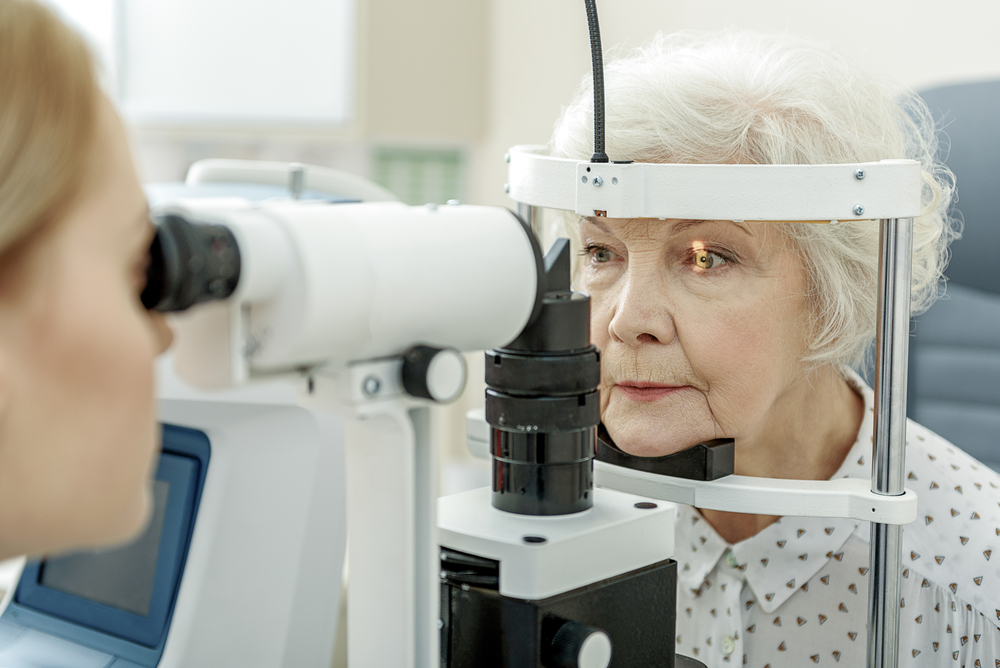
Here’s good news if you suffer from age-related macular degeneration, the leading cause of severe vision loss among people 50 years of age or older in industrialized countries. A team of researchers at Miguel Servet University Hospital in Zaragoza, Spain and the University of Toronto in Canada have found that, contrary to previous clinical trial findings, monthly injections to counteract AMD may not be necessary. The study was in May 2014 presented at the Annual Meeting of the Association for Research in Vision and Ophthalmology in Orlando, Florida..