
Some women with breast cancer can now undergo a “one and done” approach combining nipple-sparing mastectomy with immediate single-stage implant (SSI) breast reconstruction in a single procedure, according to a report in the July issue of Plastic and Reconstructive Surgery®, the official medical journal of the American Society of Plastic Surgeons (ASPS). A release from… Continue reading “One and Done” Breast Reconstruction
Category: Breast Cancer
Encouraging Breast-Cancer News

Are we making progress in the battle against breast cancer? Statistics indicate it’s possible; as this post from the National Cancer Institute indicates, mortality rates have been declining. Here is what the NCI experts have to say: Breast cancer mortality rates have been declining among women in many western countries since the 1970s. Overall, breast… Continue reading Encouraging Breast-Cancer News
Partial Breast Radiation As Effective As Whole Breast Therapy

Women who were diagnosed with breast cancer and treated with a one-week regimen of partial breast radiation after their lumpectomy showed no increase in cancer recurrence or difference in cosmetic results compared to women who received post—surgical radiation of the entire breast for up to six weeks. The two-decade study, conducted by researchers from UCLA,… Continue reading Partial Breast Radiation As Effective As Whole Breast Therapy
Hereditary Breast and Ovarian Cancers: Moving Toward More Precise Prevention

By NIH Director Francis Collins, M.D., Ph.D. Inherited mutations in the BRCA1 gene and closely related BRCA2 gene account for about 5 to 10 percent of all breast cancers and 15 percent of ovarian cancers [1]. For any given individual, the likelihood that one of these mutations is responsible goes up significantly in the presence… Continue reading Hereditary Breast and Ovarian Cancers: Moving Toward More Precise Prevention
An Update on Precision Medicine

Everyone knows that different people don’t respond the same way to medications, and that “one size does not fit all.” FDA has been pushing for targeted drug therapies, sometimes called “personalized medicines” or “precision medicines,” for a long time. Targeted therapies make use of blood tests, images of the body, or other technologies to measure… Continue reading An Update on Precision Medicine
Ultrasound Helps Show Which Breast Ca Patients Need Lymph Nodes Removed

Which breast cancer patients need to have underarm lymph nodes removed? Mayo Clinic-led research is narrowing it down. A study published in the February 2015 issue of the Journal of Clinical Oncology finds that not all women with lymph node-positive breast cancer treated with chemotherapy before surgery need to have all of their underarm nodes… Continue reading Ultrasound Helps Show Which Breast Ca Patients Need Lymph Nodes Removed
Breast Reconstruction Over Age 65: Implants vs. Patients’ Own Tissues

Older women don’t have an increased overall risk of complications from implant-based breast reconstruction after mastectomy, but women aged 65 or older are at increased risk of blood clot-related complications after tissue-based breast reconstruction. Those are the findings of a study published in the February 2015 issue of Plastic and Reconstructive Surgery, the official medical… Continue reading Breast Reconstruction Over Age 65: Implants vs. Patients’ Own Tissues
How to Get The Best Mammogram Possible
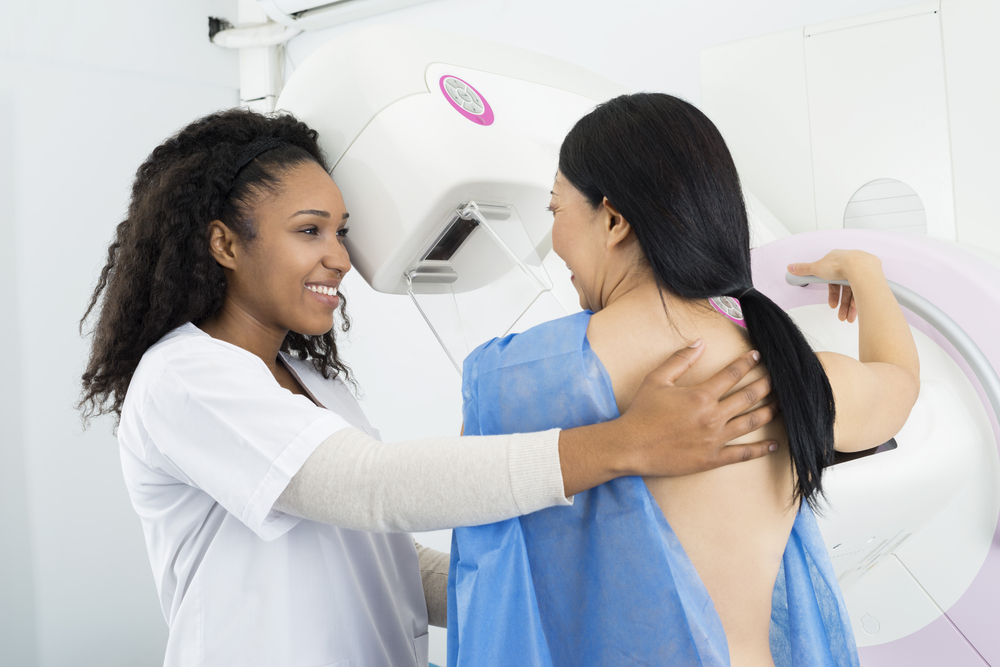
Editor’s Note: Mammograms are one of the most commonly performed procedures for women, and there is little argument about their value in detecting breast cancer. But not all mammograms are equal, and you owe it to yourself to get the best one available. Here, from the federal Food and Drug Administration (FDA), is an explanation… Continue reading How to Get The Best Mammogram Possible
Elderly Breast Ca Patients Get Radiation Despite Findings

An analysis done at Duke University has found that while clinical trial data support omitting radiation treatments for elderly women with early stage breast cancer, nearly two-thirds of these women continue to receive it. The findings were published online in December 2014 in “Cancer”, a peer-reviewed journal of the American Cancer Society. A release from… Continue reading Elderly Breast Ca Patients Get Radiation Despite Findings
New Device May Ease Mammography Discomfort

Researchers have developed a new device that may result in more comfortable mammography. According to a study presented in December 2014 at the annual meeting of the Radiological Society of North America (RSNA), standardizing the pressure applied in mammography would reduce pain associated with breast compression without sacrificing image quality. A release from the society… Continue reading New Device May Ease Mammography Discomfort
Getting Potentially Life-Saving Drugs to High-Risk Breast Cancer Patients Faster
By Tatiana Prowell, M.D. and Richard Pazdur, M.D. Researchers at an international oncology conference held in October in Spain reported that pertuzumab, which was FDA-approved for treatment of HER2+ metastatic breast cancer in June 2012, improved survival by an average of nearly 16 months when added to standard treatment. This was yet another piece of… Continue reading Getting Potentially Life-Saving Drugs to High-Risk Breast Cancer Patients Faster
Meditation Improves Cells in Breast-Cancer Survivors

Practicing meditation can have a positive physical impact on breast-cancer survivors at the cellular level, research has found for the first time. The investigators, who worked out of Alberta Health Services’ Tom Baker Cancer Centre and the University of Calgary Department of Oncology, showed that telomeres (protein complexes at the end of chromosomes) maintain their… Continue reading Meditation Improves Cells in Breast-Cancer Survivors
Breast Cancer Patients and Hot Flashes

Physicians aren’t adequately treating hot flashes in breast-cancer patients, and that could have a serious effect on the patients’ health-care decisions, according to new research. More than 70 percent of breast-cancer survivors have menopause-related problems, especially hot flashes. These can persist for more than five years after cancer treatment has ended. Experts say they affect… Continue reading Breast Cancer Patients and Hot Flashes
Update: Testing for the Breast Cancer Gene

Should you be tested to see if you have the breast-cancer gene? Here, experts from the federal Centers for Disease Control tell you what you need to know: Each year, over 200,000 women in the United States are diagnosed with breast cancer and more than 20,000 are diagnosed with ovarian cancer. About 3% of breast… Continue reading Update: Testing for the Breast Cancer Gene
Looking Toward Changes in Breast-Cancer Detection

Scientists at the Food and Drug Administration are studying the next generation of screening and diagnostic devices, some of which borrow from the world of entertainment. Soon, three-dimensional (3D) images in actual 3D might help your doctor find hidden tumors and better diagnose cancers, thanks to the regulatory work being done by a team at… Continue reading Looking Toward Changes in Breast-Cancer Detection
A Link Between Bra Wearing and Breast Cancer? Forget about It

Despite what some people believe, there’s absolutely no evidence of a link between wearing a bra and breast cancer risk in postmenopausal women and wearing a bra, according to research published in Cancer Epidemiology, Biomarkers & Prevention, a journal of the American Association for Cancer Research. “There have been some concerns that one of the… Continue reading A Link Between Bra Wearing and Breast Cancer? Forget about It
Breast Screening Over Age 70 May Lead to Overdiagnosis
Mammograms for women over the age of 70 s doesn’t prompt a sharp fall in advanced disease and may instead lead to overdiagnosis and overtreatment, according to research led by a team based at Leiden University Medical Centre in the Netherlands. Their paper was published in BMJ,, coinciding with the opening of the Preventing Overdiagnosis… Continue reading Breast Screening Over Age 70 May Lead to Overdiagnosis
Perspectives on Breast Reconstruction

Less than 42 percent of women underwent breast reconstruction following a mastectomy for cancer, and the factors associated with foregoing reconstruction included being black, having a lower education level and being older. That is the finding of Monica Morrow, M.D., of the Memorial Sloan Kettering Cancer Center, New York, and colleagues who published their results online August 20th 2014 JAMA Surgery.