
Aging brings unpredictable changes to our senses, often making them less sharp. As you age, being aware of how these senses may change will ensure your safety and comfort and promote overall well-being. Here, from the experts at www.homecareassistance.com, are six 6 common indications of vision loss that you need to be aware of: Changes… Continue reading 6 Common Signs of Vision Loss
Tag: Vision Health
Virtual Reality Tests Balance in Glaucoma Patients

Falls are the leading cause of injury-related death and morbidity in older adults, especially those with a chronic eye disease such as glaucoma. To investigate this problem, a multidisciplinary group of researchers has become the first to use virtual reality technology to develop a new method for measuring balance control in those with glaucoma. The… Continue reading Virtual Reality Tests Balance in Glaucoma Patients
Helping a Stroke Patient Recover 3D Vision

Impaired vision is one of the most common consequences of a stroke. In rare cases, patients may even lose their ability to perceive depth. Such patients see the world around them as flat, like a two-dimensional picture. This makes it impossible for them to judge distances accurately – a skill they need, for instance, when… Continue reading Helping a Stroke Patient Recover 3D Vision
The Best Medicine for Diabetic Macular Edema?

Researchers have determined that the drug Eylea, used to treat diabetic macular edema, is more effective than two other medicines in severe cases. However, the other two drugs, Avastin and Lucentis, also work well. The study, published in the New England Journal of Medicine, is the first to compare the efficacy of the drugs. “These… Continue reading The Best Medicine for Diabetic Macular Edema?
“2-in-1” Test Simplifies Retina Evaluations

Research published in February 2015 in The FASEB Journal suggests that a newly developed test can measure how well both the blood vessels and the light-sensing cells (photoreceptors) of the retina in the ye are working. A release from the Federation of American Societies for Experimental Biology reports that the study details a test developed… Continue reading “2-in-1” Test Simplifies Retina Evaluations
Vision Health: Myths vs. Facts
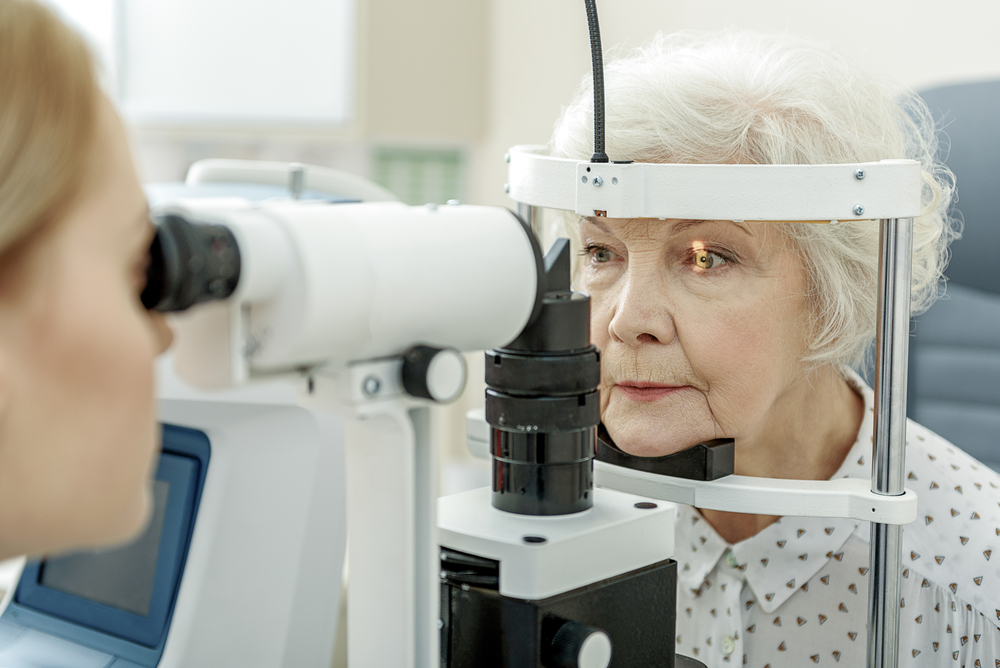
Whether you’re nearsighted, farsighted, or have 20/20 vision, it’s important to take good care of your eyes. Take a look at the following statements about eye safety and ask yourself: Fact or fiction? It’s legal to market decorative contact lenses as over-the-counter products—and they’re safe to wear, even if an eye doctor hasn’t examined them… Continue reading Vision Health: Myths vs. Facts
Calcium Deposits Linked to AMD

Microscopic spheres of calcium phosphate have been linked to the development of age-related macular degeneration (AMD), a major cause of blindness, according to research led by University College London. A release from UCl reports that AMD affects one in five people over 75, causing their vision to slowly deteriorate, but the cause of the most… Continue reading Calcium Deposits Linked to AMD
How Safe Is Your Eye Makeup Routine?

Eye make-up and cosmetics can enhance your appearance but may end up being harmful to your eyes if applied carelessly. Issues can range from allergic reactions to eye infections to serious injuries. Though extreme, the most serious eye issue caused by make-up application could involve injury to the cornea, which is the front part of… Continue reading How Safe Is Your Eye Makeup Routine?
Glaucoma Eye Drops Greatly Reduce Risk of Vision Loss

Prostaglandin analogue eye drops including brand names Xalatan, Lumigan, and Travatan Zcan greatly reduce risk of vision loss in people with open angle glaucoma (OAG). This condition is one of the leading causes of blindness. Results of first placebo-controlled trial to assess the drops/ vision-preserving effect was published in December 2014 in The Lancet. A… Continue reading Glaucoma Eye Drops Greatly Reduce Risk of Vision Loss
Top-Selling Vitamins for AMD Have Misleading Claims

A multi-university study analyzed popular vitamins that purportedly help treat age-related macular degeneration (AMD), the leading cause of blindness in the United States. The goal was to determine whether the products’ formulations and claims are consistent with scientific findings. The team determined that of the 11 supplements analyzed, seven do not adhere to proven formulas… Continue reading Top-Selling Vitamins for AMD Have Misleading Claims
New Therapy Holds Promise for Restoring Vision

Retinitis pigmentosa, a condition afflicting people of all ages, causes a gradual loss of vision. Sight is lost from the periphery to the center, usually leaving people with the inability to navigate their surroundings. Some 100,000 Americans suffer from this group of inherited retinal diseases. Now a new genetic therapy that employs a virus to… Continue reading New Therapy Holds Promise for Restoring Vision
New Laser Therapy Helps Slow AMD

A low impact, low energy laser treatment for patients with early age-related macular degeneration (AMD) has produced positive results by reducing indicators of the disease, according to research done at the University of Melbourne. The team found that unlike other laser treatments, the new and faster laser did not result in damage to the retina,… Continue reading New Laser Therapy Helps Slow AMD
5 Tips to Prevent Dry Eye This Winter

1. Warm Compresses Dry eye is caused by a lack of natural tears, which are composed of water and a much-needed oily substance. Over time, cells in the glands may harden, keeping the oil from getting into the tear film. Without that oil, the water in tears evaporates too quickly, leaving eyes feeling dry. A… Continue reading 5 Tips to Prevent Dry Eye This Winter
How to Stop Diabetic Eye Disease

Diabetes, one of the most serious health issues today, affects more than 9 percent of the U.S. population. Although we’re accustomed to think of it primarily in terms of excess weight, the illness carries other risks as well, including that of diabetic eye disease. According to the National Eye Institute (NEI), part of the National… Continue reading How to Stop Diabetic Eye Disease
Discovery May Help Prevent Blindness

A team of researchers at the Institut de Researches Cliniques de Montréal (IRCM) led by Michel Cayouette, PhD discovered that a protein found in the retina of the eye plays an essential role in the function and survival of light-sensing cells that are required for vision. These findings could have a significant impact on the… Continue reading Discovery May Help Prevent Blindness
Need to Know: Pink Eye

Although pink eye, or conjunctivitis, affects some very delicate areas of your eye, it’s one of the most treatable eye conditions. Here, the federal Centers for Disease Control (CDC) shares what you need to know about pink eye: its symptoms, how to prevent it, and when you should seek treatment. WHAT IS PINK EYE? An… Continue reading Need to Know: Pink Eye
Cheaper Drug for Macular Degeneration

Neovascular macular degeneration is a progressive and chronic disease of the eye, and a leading cause of blindness in older people. About one in 10 people with macular degeneration suffers legal blindness. Bevacizumab is a drug that has been developed to treat cancer, while ranibizumab is marketed specifically for age-related macular degeneration. The two drugs… Continue reading Cheaper Drug for Macular Degeneration
Senior Eye Health: The Facts and the Myths
Good vision is precious throughout life, but it’s especially important as we grow older. Having vision problems can make a difference in our ability to perform everyday tasks, and even to live independently. With so much information (both good and bad) available about health issues, it’s crucial to distinguish truth from myth. Here, the experts… Continue reading Senior Eye Health: The Facts and the Myths