
Alzheimer’s disease, long thought to be a single disease, really consists of three distinct subtypes, according to a UCLA study. The discovery could eventually lead to new treatments for the debilitating neurological disorder. Additionally, the study found that one of the three variations, the cortical subtype, appears to be fundamentally a different condition than… Continue reading Researchers Discover Alzheimer’s “Subtypes”
Tag: treatment
Are We Close to a Better Treatment for Ulcerative Colitis?

Experts are optimistic about a one-step ulcerative colitis treatment that uses an oral drug consisting of microparticles and natural herbal molecules that target the colon. The treatment was developed by researchers from the Institute for Biomedical Sciences at Georgia State University and Southwest University in China. The findings, published in the journal Colloids and Surfaces… Continue reading Are We Close to a Better Treatment for Ulcerative Colitis?
Drug-Like “Compounds” May Improve Prostate-Cancer Treatment

Researchers from Southern Methodist University have discovered three new compounds that could, ultimately, offer better survival odds to prostate cancer patients. The drug-like compounds can be modified and developed into medicines that target a protein in the human body that is responsible for chemotherapy resistance in cancers, said biochemist Pia D. Vogel, lead author on… Continue reading Drug-Like “Compounds” May Improve Prostate-Cancer Treatment
ThirdAge Health Close-Up: Smoking and Your Eyesight
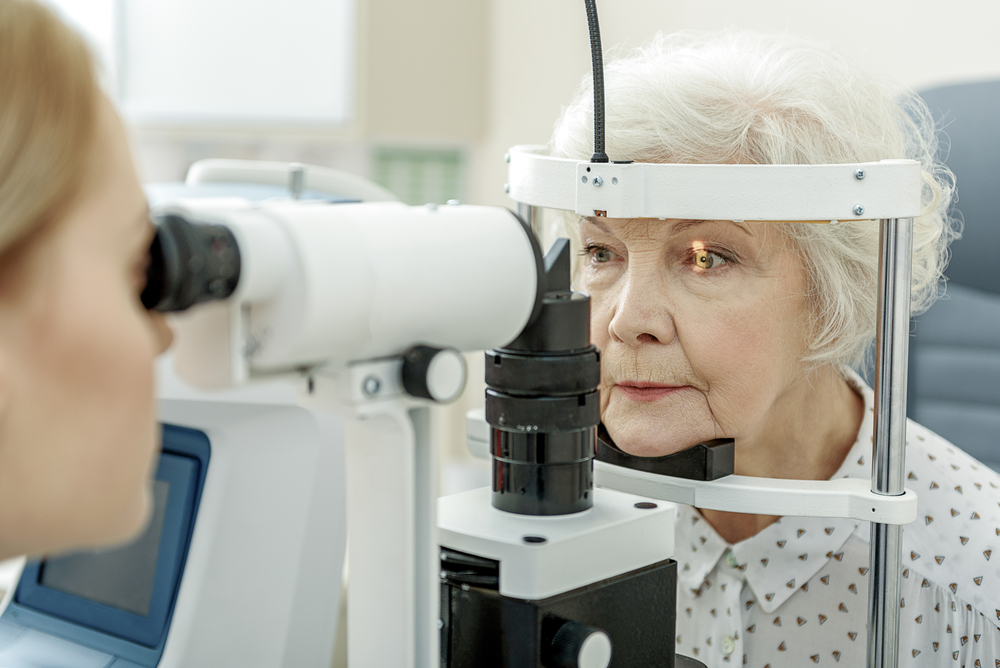
Editor’s note: Smoking is the leading, preventable cause of death and disease in the U.S. Each year tobacco use kills more than 480,000 Americans. Smoking cause’s immediate damage to the body and it can lead to serious long-term health problems. In fact, for every smoking-related death, at least 30 Americans live with a smoking-related illness. … Continue reading ThirdAge Health Close-Up: Smoking and Your Eyesight
New Sepsis-Treatment Guidelines Can Help Save Patients

University of Pittsburgh researchers have developed guidelines that will help health care facilities comply with tough new regulations on treating sepsis. Sepsis is a life-threatening condition that arises when the body’s response to an infection injures its own tissues and organs. It occurs in more than 230,000 U.S. patients every year, with most initially… Continue reading New Sepsis-Treatment Guidelines Can Help Save Patients
Hospitals Unfairly Penalized for Good Care

A study by Johns Hopkins researchers indicates that hospitals suffer improper financial penalties because of the number of patients who suffer blood clots in the lung or leg. The researchers said the penalties did not take into account clots that occurred despite consistent use of the best preventive therapies. “We have a big problem with… Continue reading Hospitals Unfairly Penalized for Good Care
Learning to Live with Chronic Pain

Chronic pain comes in a wide variety of forms, and the causes are many. Recent studies show that nearly one third of us — more than 100 million Americans each year, suffer from back pain, joint pain, arthritis; neck and muscle pain, headache and other types of recurrent pain. People who suffer from chronic pain… Continue reading Learning to Live with Chronic Pain
COPD Patients Don’t Know Enough About The Illness

A new national survey of patients with chronic obstructive pulmonary disease (COPD) shows a surprising lack of awareness of risk factors and knowledge of diagnosis stage. That lack of knowledge, researchers says, has a significant impact on patients’ quality of life, employment and ability to afford treatment. COPD, the third most common cause of death… Continue reading COPD Patients Don’t Know Enough About The Illness
Non-Invasive Technique Can Help with Paralysis

Thanks to a new, non-invasive procedure that stimulates the spinal cord, five men who had been completely paralyzed were able to move their legs. It is believed to be the first time that voluntary leg movements have ever been relearned in completely paralyzed patients without surgery. “These findings tell us we have to look at… Continue reading Non-Invasive Technique Can Help with Paralysis
The Placebo Effect May Really Work

The placebo effect – being “cured” by something that really isn’t medicine – seems to work even if you know what you’re getting is fake, researchers say. The discovery, by University of Colorado-Boulder researchers, was published in The Journal of Pain. But the investigators also found that the subjects need ample time – four sessions… Continue reading The Placebo Effect May Really Work
Better Communication Needed on End-of-Life Directives

Increasing numbers of people have advanced care planning, but a survey found that almost 40 percent of them didn’t discuss their preferences with the people they designated as their representatives. A study led by Johns Hopkins researchers reviewed nearly 2,000 surveys with people whose loved ones died of cancer. They found a 40 percent increase… Continue reading Better Communication Needed on End-of-Life Directives
Bipolar Disorder: What You Need to Know

Much attention is paid to the issue of depression, but there is another mental illness that people know much less about. They may be suffering from it, or living with a person who has it. And not being aware of borderline personality disorder in cases like that can lead to serious consequences. Here, from… Continue reading Bipolar Disorder: What You Need to Know
Promising Treatment for Irritable Bowel Syndrome

Pinaverium offers quick and effective relief of irritable bowel syndrome (IBS) symptoms, according to clinical trial results published in June 2015 in Clinical Gastroenterology and Hepatology, the official clinical practice journal of the American Gastroenterological Association. A release from the association notes that pinaverium bromide (pinaverium), an antispasmodic, is used widely in many countries around… Continue reading Promising Treatment for Irritable Bowel Syndrome
Partial Breast Radiation As Effective As Whole Breast Therapy

Women who were diagnosed with breast cancer and treated with a one-week regimen of partial breast radiation after their lumpectomy showed no increase in cancer recurrence or difference in cosmetic results compared to women who received post—surgical radiation of the entire breast for up to six weeks. The two-decade study, conducted by researchers from UCLA,… Continue reading Partial Breast Radiation As Effective As Whole Breast Therapy
Treatment for Stroke Shows Wide Regional Variations

According to a new study, treatment for stroke varies sharply from region to region – and thousands of people a year may end up unnecessarily disabled as a result. In the July issue of the journal Stroke, University of Michigan Medical School researchers report the results of a study that for the first time shows… Continue reading Treatment for Stroke Shows Wide Regional Variations
New Cancer Research Approaches Specifically Target 60+ Population

By Samuel Waxman, M.D. Distinguished Service Professor Medicine, Hematology and Medical Oncology and Distinguished Service Professor, Oncological Sciences, Icahn School of Medicine at Mount Sinai and Founder & CEO, Samuel Waxman Cancer Research Foundation. One of America’s precious resources, its senior population, is not getting its fair share of attention in the war against cancer… Continue reading New Cancer Research Approaches Specifically Target 60+ Population
Developing Better Clinical Trials

Although double blind randomized controlled trials (DBRCTs) are considered the gold standard in evaluating a drug or therapy, it may be time for a new model, according to researchers. They say that DBRCTs don’t factor in patient behaviors, such as diet and lifestyle choices, that can affect the drug or treatment being tested. A recent… Continue reading Developing Better Clinical Trials
A New Treatment for Fibromyalgia?

Women who have fibromyalgia appear to benefit from treatment in a hyperbaric oxygen chamber, according to researchers at Rice University and institutes in Israel. The painful condition improved in every one of the 48 women who completed two months of hyperbaric oxygen therapy, the researchers said. Brain scans of the women before and after treatment… Continue reading A New Treatment for Fibromyalgia?