
Diagnosing coronary heart disease in women has become more accurate through gender-specific research that clarifies the role of both obstructive and non-obstructive coronary artery disease as contributors to ischemic heart disease in females, according to a statement published in June 2014 in the American Heart Association journal Circulation.
Author: Sondra Forsyth
Sondra Forsyth is Co-Editor-in-Chief of ThirdAge.com. She is a National Magazine Award winner with scores of major magazine bylines and twelve books to her credit. Her most recent book is “Candida Cleanse: The 21-Day Diet to Beat Yeast and Feel Your Best”. Sondra was Executive Editor at “Ladies’ Home Journal,” Features Editor at “Cosmopolitan,” and Articles Editor at “Bride’s”. A former ballerina, she founded Ballet Ambassadors, an arts-in-education company in New York City, and served as Artistic Director for 16 years.
Diuretics Risky for Older Adults

Adults over 65 with high blood pressure who have recently begun taking thiazide diuretics are at a greater risk for developing metabolic-related adverse events including acute kidney injury, according to research done at the University of Texas Southwestern Medical Center and the University of California, San Francisco. The study was published in June 2014 in the Journal of the American Geriatrics Society.
Watch: Irritable Bowel Syndrome Advice

Here’s another addition to our ThirdAge Video Collection. Press play to start learning!
ThirdAge Health Close-Up: I Fell and Dislocated My Shoulder

By Sherry Amatenstein, LCSW
Docs Say “AMEN” When Patients Pray for a Miracle

Cancer clinicians and a chaplain at the Johns Hopkins Kimmel Cancer Center have developed a new tool to help doctors, nurses, and other health care providers talk to dying patients and families who are, literally, praying for a miracle.
AMD: Omega-3 Stops Unwanted Blood Vessel Growth
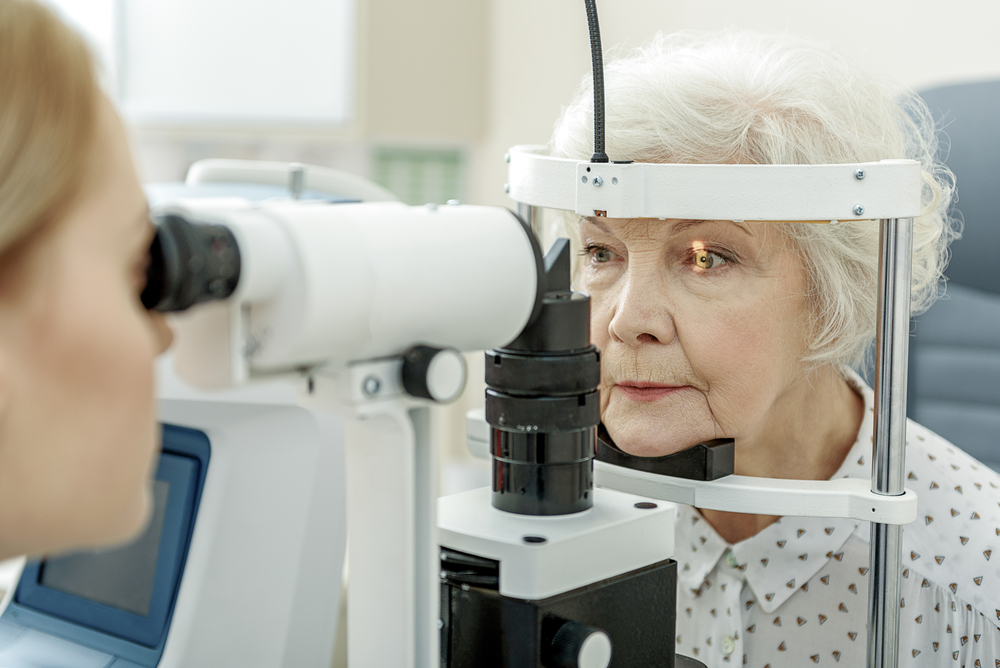
Age-related macular degeneration (AMD), which is characterized blood vessel growth, is the primary cause of blindness in the elderly in industrialized countries. The prevalence of the disease is projected to increase 50% by the year 2020. There is an urgent need for new pharmacological interventions for the treatment and prevention of AMD.
Lower BP Not Always Better
For decades, common medical wisdom has been “the lower the better” in treating the approximately one in three people in this country who have high blood pressure. But does that approach result in reduced risk for dangerous heart events? Not necessarily, according to research done at Wake Forest Baptists Medical Center in Winston Salem, North Carolina, and published in the June 16th online edition of JAMA Internal Medicine.
Discussing Sensitive Subjects With Your Doctor

Much of the communication between doctor and patient is personal. To have a good partnership with your doctor, it is important to talk about sensitive subjects, like sex or memory problems, even if you are embarrassed or uncomfortable.
Bionic Pancreas Outperforms Insulin Pump

People with type 1 diabetes – a lifelong condition — who used a bionic pancreas instead of manually monitoring glucose using fingerstick tests and delivering insulin using a pump were more likely to have blood glucose levels consistently within the normal range, with fewer dangerous lows or highs. The full report of the findings, funded by the National Institutes of Health, was published June 15th 2014 in the New England Journal of Medicine.
Health Buzzwords on Food Products: False Promises?

Health-related buzzwords such as “antioxidant,” “gluten-free” and “whole grain,” lull consumers into thinking packaged food products labeled with those words are healthier than they actually are, according to a research done at the University of Houston.
A release from the university reports that the team suggests that false sense of health as well as a failure to understand the information presented in nutrition facts panels on packaged food may be contributing to the obesity epidemic in the United States.
Synching Info Between Homes & Hospitals

Researchers at the University of Missouri in Columbia are working to develop an in-home health monitoring and alert system that streams patients’ individualized health information between homes and hospitals. The system’s ability to provide comprehensive health information could lead to better care for patients as well as reduced costs for individuals and health systems.
Needed: Activity Apps for Older Adults

Commercially available activity-monitoring apps, Web sites, and wearable devices allow for easy self-management of health and wellness. This technology may be particularly helpful for older adults, who can improve their cognitive function through proper diet and exercise. However, in spite of the growing popularity of and potential benefits of tracking monitors, product designers rarely consider those over 65 to be a viable user group.
6,000 Steps a Day Helps Ease OA

Research done at from Sargent College at Boston University in Massachusetts shows that walking just 6,000 steps a day reduces the risk of developing mobility issues such as difficulty getting up from a chair and climbing stairs that are often associated with knee osteoarthritis (OA). The typical recommendation I 10,000 steps – about five miles — a day but BU team found that fewer steps will do the trick. The study, which was funded in part by the National Institutes of Health, was published in June 2014 in in Arthritis Care & Research.
How Sweet It Is: All About Sugar Substitutes

Whether it’s to cut down on the number of calories they consume or any of a variety of other reasons, some people use sugar substitutes – also called high-intensity sweeteners – to sweeten and add flavor to their foods. They can be used alone to sweeten foods and beverages such as iced tea or coffee, or as an ingredient in other products. There are a number of sugar substitutes on the market from which to choose.
New Ways to Combat MRSA in Hospitals

New guidelines aim to reduce the prevalence of methicillin-resistant Staphylococcus aureus (MRSA), improve patient safety and prioritize current prevention efforts underway in hospitals. This drug resistant bacterium is a common source of patient morbidity and mortality in U.S. hospitals, causing nearly twice the number of deaths, significantly longer hospital stays and higher hospital costs than other forms of the bacteria.
Men with Gout Often Have ED

A study presented in June 2014 in Paris at the European League Against Rheumatism Annual Congress (EULAR 2014) showed that erectile dysfunction (ED) is present in most men with gout and is frequently severe.
A release from EULAR reports that in a survey of 201 men, 83 had gout, of whom a significantly greater proportion had ED (76%) compared with those patients without gout. Also, a significantly greater proportion of gout patients (43%) had severe ED compared with patients without gout (30%).
Watch: Summer Diet Shape-Ups

Here’s another addition to our ThirdAge Video Collection. Press play to start learning!
Watch: Do’s and Don’ts of the Salad Bar

Here’s another addition to our ThirdAge Video Collection. Press play to start learning!